

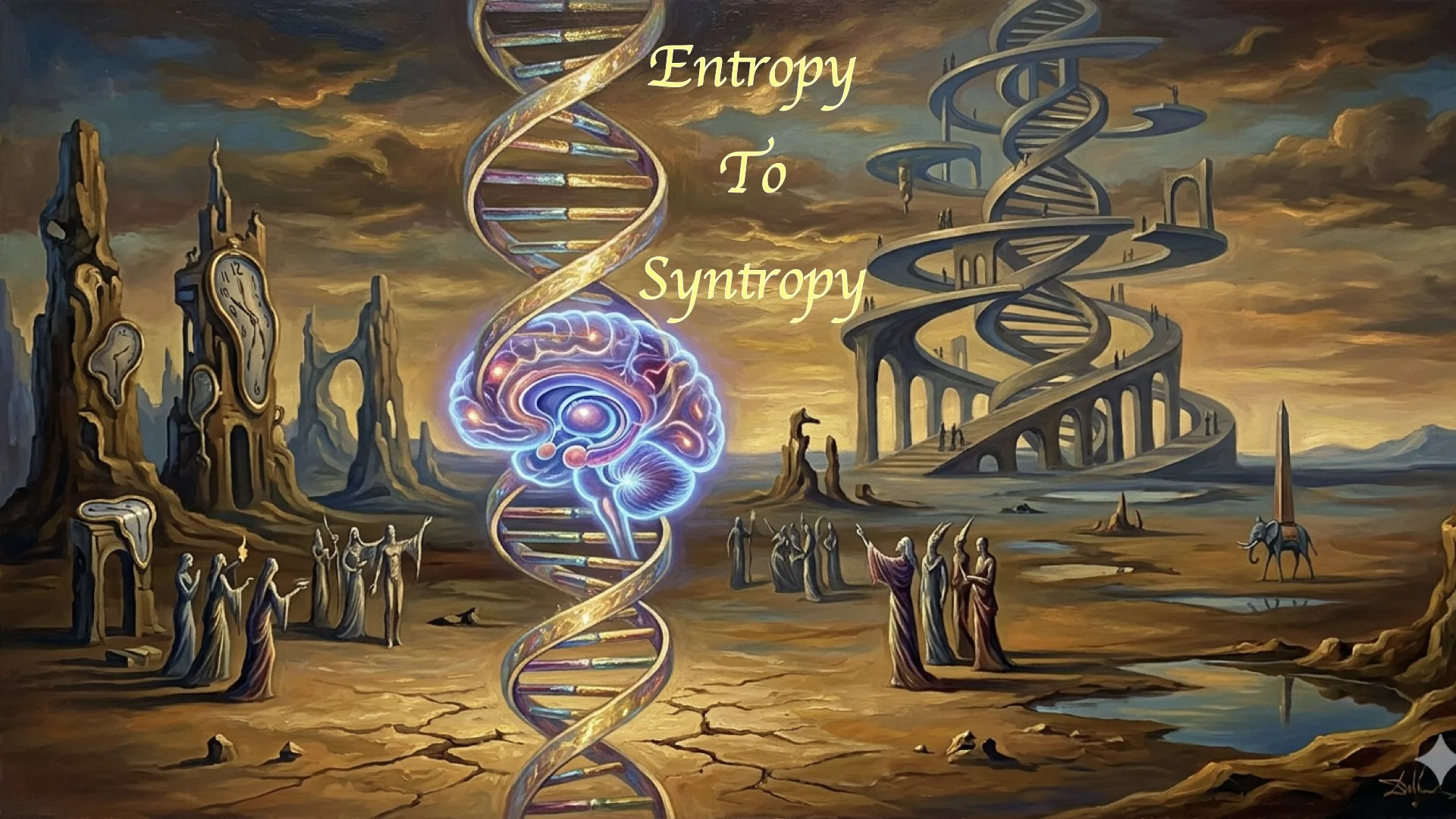
Entropy: a lack of order or predictability. A gradual decline into chaos.
Syntropy: the act of creating clarity, coherence, and usable signal out of chaos.
As we heal the darkness, the shadow of the first gene key we begin to find the BEAUTY in everything. Beauty without judgement. Syntropy - Coherence
Use this video to aid in the clearing of the darkness, the shadows, the imbalances that you've brought with you throughout your lifetime. From the very beginning.
Clearing the darkness is only the first step. We must also learn the gift of freshness the Siddhi of beauty. The beauty of everything. When we have never known beauty, our nervous system, our energy may not understand it. It may rebuild against it.
This is why we tap to facilitate that understanding within every cell of our body. We tapped to talk to the subconscious, the limbic system, the inner child. We tap to release, we tap to learn.
Download the tapping protocol here.
in the 3rd gene key we move from the:
The 3rd Gene Key: moving from Chaos → Innovation → Innocence
The 3rd Gene Key maps a deep pattern: how our nervous system and psyche respond when something unfamiliar arrives. At its core it’s about adaptation — the capacity to transform disturbance into new form. This path unfolds through three mutations: Chaos, Innovation, and Innocence. Each stage describes a way of meeting change and the inner work needed to move from reactive fear into a quiet creative openness.
Chaos (Shadow)
What it looks like: When the 3rd Gene Key is held in shadow, change triggers panic, confusion, and resistance. The body tightens, the mind fractures into scenarios, and energy splinters into frantic reactivity. Small disruptions feel catastrophic, and we fall into repeating defensive patterns — hurry, blame, numbing, or control. Physically this shows as adrenal fatigue, tension, and a chronic sense of overwhelm.
How it forms: Early experiences that taught you the world is unstable — sudden losses, unpredictable caregivers, trauma, or environments that punished curiosity — imprint a survival strategy: avoid or fight change. That strategy once kept you safe, but now constrains growth.
The cost: Chaos keeps you stuck in repetition and fear. Creativity is blocked not because you lack capacity, but because your system interprets novelty as threat. Relationships and opportunities get filtered through precaution and scarcity rather than possibility.
Innovation (Gift)
What it looks like: The Gift of Innovation is a re-ordered relationship to change. Instead of wasting energy on fear, you channel it into experimentation. The same sensitivity that once amplified threat now becomes an antenna for novel combinations and practical solutions. You learn to iterate: try, learn, adjust. Mistakes become data, not disasters.
How it emerges: Innovation arises when you cultivate small, safe experiments that expand your tolerance for uncertainty. Neurological Recalibration, breathwork, EFT, graduated exposure to new experiences, and reframing failure as feedback all retrain the nervous system. Cognitive flexibility and playful curiosity replace rigid expectations.
The power: Innovation is practical and embodied. It doesn’t romanticize chaos; it uses it. Your mind becomes a laboratory; your body, a resilient vessel. You begin to see life as an evolving pattern where each disruption invites a new possibility. This leads to adaptive intelligence — fresh ideas that actually work in real contexts.
Innocence (Siddhi)
What it looks like: Innocence is not naiveté. It’s an open, unguarded presence that meets change without preconception or fear. In this state there is a deep trust in reality’s unfolding; responses are spontaneous, creative, and luminous. The body is relaxed, the mind quieted, and actions arise from a grounded clarity rather than effort.
How it appears: When Innovation ripens fully, a subtle inner alchemy occurs: the need to control dissolves, and with it the burden of anticipatory anxiety. There is an effortless flow where adaptation is no longer a skill you must perform but the natural expression of being present. Suffering from resistance eases because you no longer identify with the story of instability.
The embodiment: Innocence manifests as a lightness in the body, a clear and receptive nervous system that can hold novelty without distortion. Creativity then expresses as effortless action — solutions and responses that feel like they were always meant to be.
Practical steps to move through the sequence
Notice reactivity somatically: map where panic shows up in your body. Name it without judgment.
Create micro-experiments: small, low-stakes actions that introduce novelty (try a new route, change a routine, voice a small boundary). Track outcomes and sensations.
Cultivate playful curiosity: reframe mistakes as research. Ask “What did this teach me?” rather than “What went wrong?”
Somatic regulation: breathing practices, EFT, grounding, and movement to increase tolerance for arousal. Build a daily buffer that stabilizes the nervous system.
Integration practice: after each experiment, pause and sense what stayed the same and what shifted. Let the nervous system register success.
Practice surrender: allow moments of “not knowing” without solving them. Notice how presence itself reduces urgency.
How healing work supports this journey
We release held tension and conditioning that rigidify the nervous system, creating more capacity to meet novelty.
We translate cognitive insights into felt experience so change is processed body-first.
We build a felt sense of safety and support so the nervous system can move from survival patterns into creative play.
Invitation If you’re carrying the energetic imprint of chaos — chronic overwhelm, stuck patterns, or a fear of change — the path through Innovation to Innocence is a practical and embodied one. Start small. Practice being curious rather than correct. Learn to feel your edges and expand them gently.

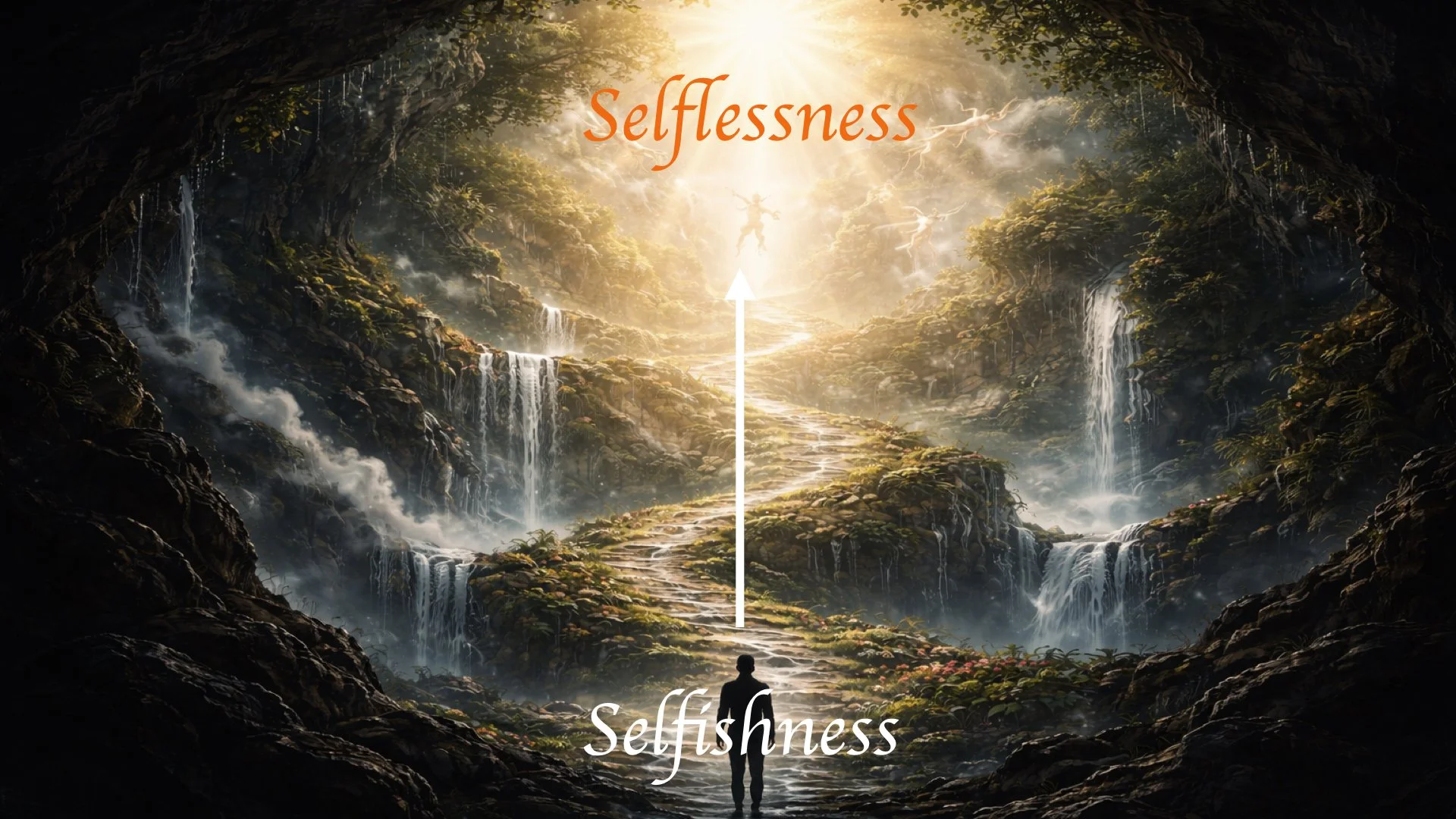
This Genetic Matrix Recalibration (GMR) video is designed to support the energetic alignment of Gene Key 27, the pathway that transforms selfishness → altruism → selflessness.
Gene Key 27 is deeply connected to the instinct to nurture, protect, and sustain life. At the shadow frequency, this instinct becomes distorted into selfishness. This does not necessarily appear as cruelty or greed. More often it shows up as subtle contraction: protecting one’s own energy, resources, time, or love out of fear that there will not be enough.
When the nervous system and genetic expression operate from this shadow state, the body tends to move into defensive survival patterns. The mind becomes preoccupied with protection and control. This contraction limits the natural flow of life force, compassion, and connection.
As the frequency rises, the shadow begins transforming into altruism. Altruism represents the awakening of the heart’s natural intelligence. In this state, giving and caring arise from genuine connection rather than obligation or fear. The body relaxes, empathy increases, and we naturally begin supporting others while still honoring our own well-being.
At its highest expression, Gene Key 27 reveals the siddhi of selflessness. Selflessness is not self-sacrifice or depletion. It is the realization that the separation between self and others begins to dissolve. Compassion flows effortlessly. Support, nourishment, and generosity arise without calculation because life is experienced as an interconnected whole.
In this frequency, many people report:
A deeper sense of inner peace
Reduced internal conflict around giving and receiving
Greater emotional resilience
More authentic relationships
A natural desire to support the well-being of others
As you watch this GMR video, allow yourself to become present with your breath and body.
If emotions, memories, or sensations arise, simply acknowledge them. There is nothing you need to force or analyze. Let any unnecessary energy surface and release naturally.
At the same time, remain open to the recalibrating frequencies and codes within the video. Allow your system to receive insights, balance, and alignment at the pace that is right for you.
The movement from selfishness to altruism to selflessness is not about becoming perfect. It is about remembering the deeper intelligence already encoded within your genetic matrix—the innate capacity to nurture life, support others, and experience unity rather than separation.
Allow the process to unfold.